


On Saturday, February 21, the Holy Father Leo XIV received His Eminence Cardinal Marcello Semeraro, Prefect of the Congregation for the Causes of Saints, in audience. During the audience, he authorized the dicastery to promulgate five decrees: one confirming the cult (equivalent to beatification), one on a miracle (for beatification), and three on heroic virtues, according to the Holy See Press Office.
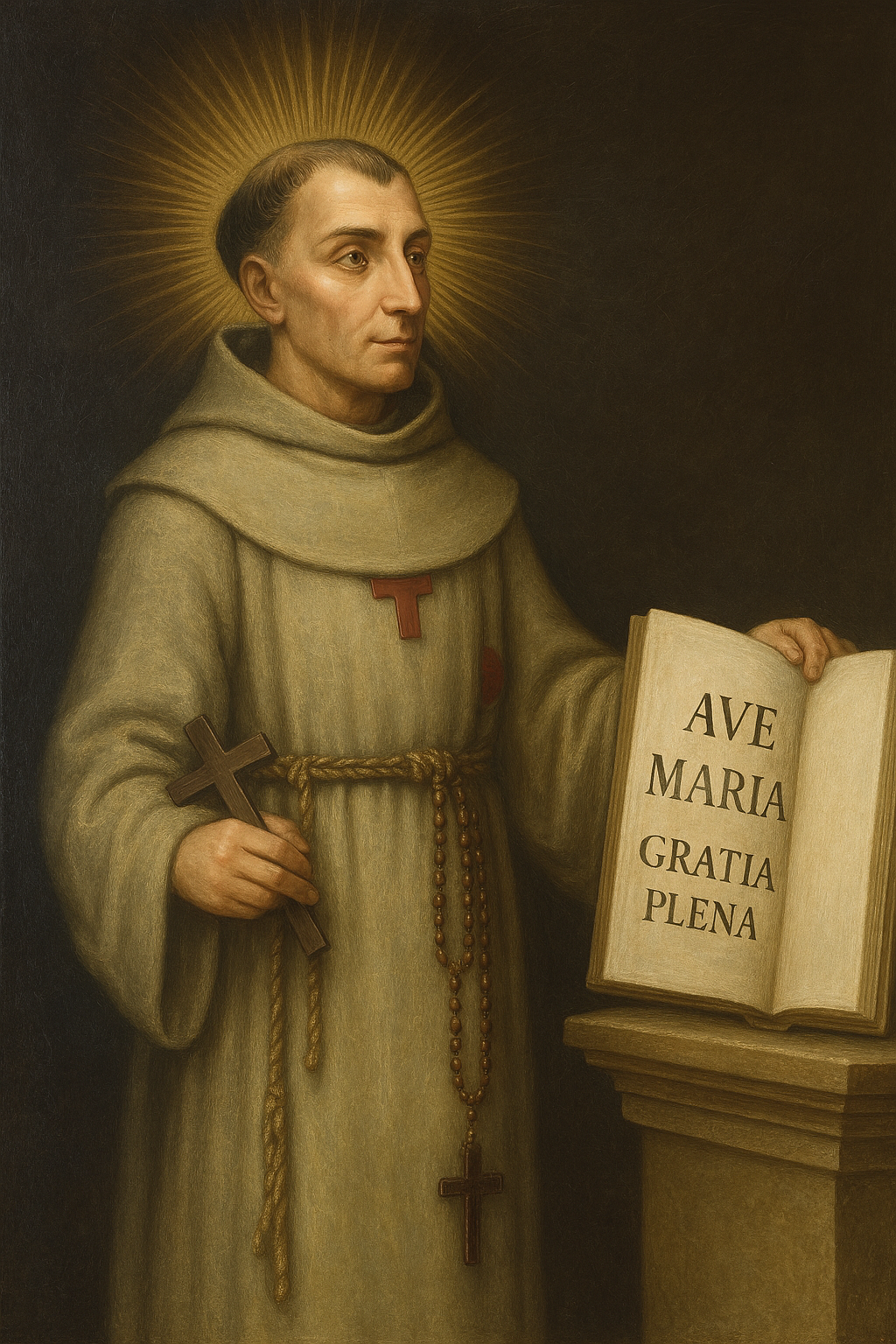
By virtue of the decree confirming immemorial cult (equivalent to beatification), Gabriel Maria, whose secular name was Gilbert Nicolas, born around 1460 near Riom (France), will be enrolled among the blessed. He joined the Observant Franciscans at the monastery of Notre-Dame de Lafond, became a priest and lecturer in moral theology. His meeting with St. Joan of Valois (also known as St. Joan of France), wife of King Louis XII, resulted in the founding of the Order of the Blessed Virgin Mary – the Annunciates – in 1501. For about 30 years, he was its general visitator. In 1517, Pope Leo X gave him the name Gabriel Maria. He died on August 27, 1532, in Rodez (France). After his death, a spontaneous cult developed, and the faithful attributed numerous miracles to his intercession.
Who was the new blessed?
Gilbert Nicolas was born around 1460 in France, near Riom in what was then Auvergne, into a family of rural notables. The youngest of three children, he received a solid education. Very early on, he showed strong faith and piety. He was particularly fond of devotion to the Blessed Virgin Mary. In his youth, everything seemed to indicate that the path to Christian marriage was opening up before him. However, one day he heard a sermon on the Immaculate Conception, which moved him so deeply that it led him to renounce all human love and devote himself entirely to God in the Order of Friars Minor (Franciscan Order of Strict Observance). He was accepted into the monastery of Notre-Dame de Lafond, near La Rochelle, where he completed his novitiate. He took his religious vows around 1480, then continued his theological studies in his order, undoubtedly in Tours or Amboise. There, he not only learned the theological teachings of St. Bonaventure, but also learned Greek and Hebrew, which was a sign of a certain modernity at that time. Shortly thereafter, he was ordained a priest. For about twenty years, he taught moral theology to young brothers in his order.
Around 1490, Gilbert Nicolas became the spiritual guide and confessor of Jeanne de Valois, the rejected wife of King Louis XII. She, becoming Duchess of Berry and settling in Bourges, surrounded herself with a few close advisors who helped her manage the duchy she had received. Brother Gilbert Nicolas became one of these closest advisors. It was he who personally and with the utmost delicacy conveyed to Joan the papal tribunal’s ruling annulling her marriage to the king.
Father Gilbert Nicolas, Annunciates, and The Rule of the Ten Virtues of the Blessed Virgin Mary.
In 1499, Fr. Gilbert Nicolas heard from Duchess Joan of Valois about her childhood dream and the promise she had received in a vision that she would found a religious order dedicated to the Blessed Virgin Mary. In view of the serious motivations behind this new foundation, Father Gilbert Nicolas became involved in it without hesitation. He organized the recruitment and training of the first sisters. At Joanna’s request and with her active participation, he also undertook the drafting of the rule of the new order and personally went to the pope to ask for its approval.
On February 12, 1502, Pope Alexander VI approved the rule of the Annunciates, which was given the name Rule of the Ten Virtues of the Blessed Virgin Mary. Once approval was granted, the pope appointed Fr. Gabriel Maria as general visitator of the new community. On the feast of Pentecost in 1504, St. Joan de Valois made her profession on the rule of her order, and the order itself was approved shortly before her death on February 4, 1505.
It was St. Joan of France’s desire to establish a male branch of her order. In a sense, this was realized two centuries after her death, on June 6, 1701, in Warsaw, when St. Stanislaus of Jesus and Mary Papczyński, founder of the Marians, was the first in history to make a solemn profession on the Rule of the Ten Virtues of the Blessed Virgin Mary, adapted to male religious orders, and then accepted it from the other members of his community. The Marians lived by this rule for over two centuries, until it ceased to be legally binding as a result of reforms caused by difficult political circumstances. However, it continues to inspire subsequent generations of Marians spiritually and remains an important element of the Congregation’s charism.
In 1498, Fr. Gilbert Nicolas was appointed guardian of the monastery in Amboise, and in 1502 he was elected provincial vicar of Aquitaine. Despite his important duties, he assisted the duchess in her work as co-founder and wrote down her last wishes. Before her death, Joan entrusted him with the leadership and future of her order. Until his death, the Franciscan faithfully fulfilled this mission, ensuring that the new order flourished by establishing new foundations. Father Gilbert provided it with a theological foundation and legal stability.
Gilbert held important positions in his order, serving several times as provincial vicar, guardian, vicar general, visitor, general definitor, provincial minister, and commissioner of the Observant Order. He traveled extensively throughout all the provinces under his authority, visiting the monasteries of the brothers and sisters of the Annunciation, continuing to defend the interests of his orders. During these years, he worked to promote the Order of Peace, a movement of Marian devotion offered to anyone who wished to be a peacemaker in their state of life. To increase the impact of this work, the Franciscan did not hesitate to create brotherhoods and publish small treatises on Marian devotion for future members. His contribution to the history of the Franciscan Order seems significant, in particular his defense of the Observant branch of Franciscans and the initiatives he took in the field of spiritual life. In this way, he published a commentary on the Rule of St. Francis for his brothers in the Order. The role played by Gabriel-Maria in the great conflict that plagued the Franciscan Order at that time seems to be very significant. He used both his theological and canonical knowledge and his true sense of debate and compromise.
From 1529, his health declined. He wrote his spiritual testament for the Annunciation Sisters. In 1530, he went to the new convent of the sisters in Louvain, where his faith resulted in the miraculous healing of a novice, to whom he also predicted that one day she would become the superior, which indeed happened in 1544.
His health continued to deteriorate, but despite this, he remained involved in the life of the Franciscans and the Annunciation Sisters. On July 26, he celebrated his last Mass. He died on August 27, 1532, in the afternoon, leaving all his daughters and brothers around him an example of authentic holiness.